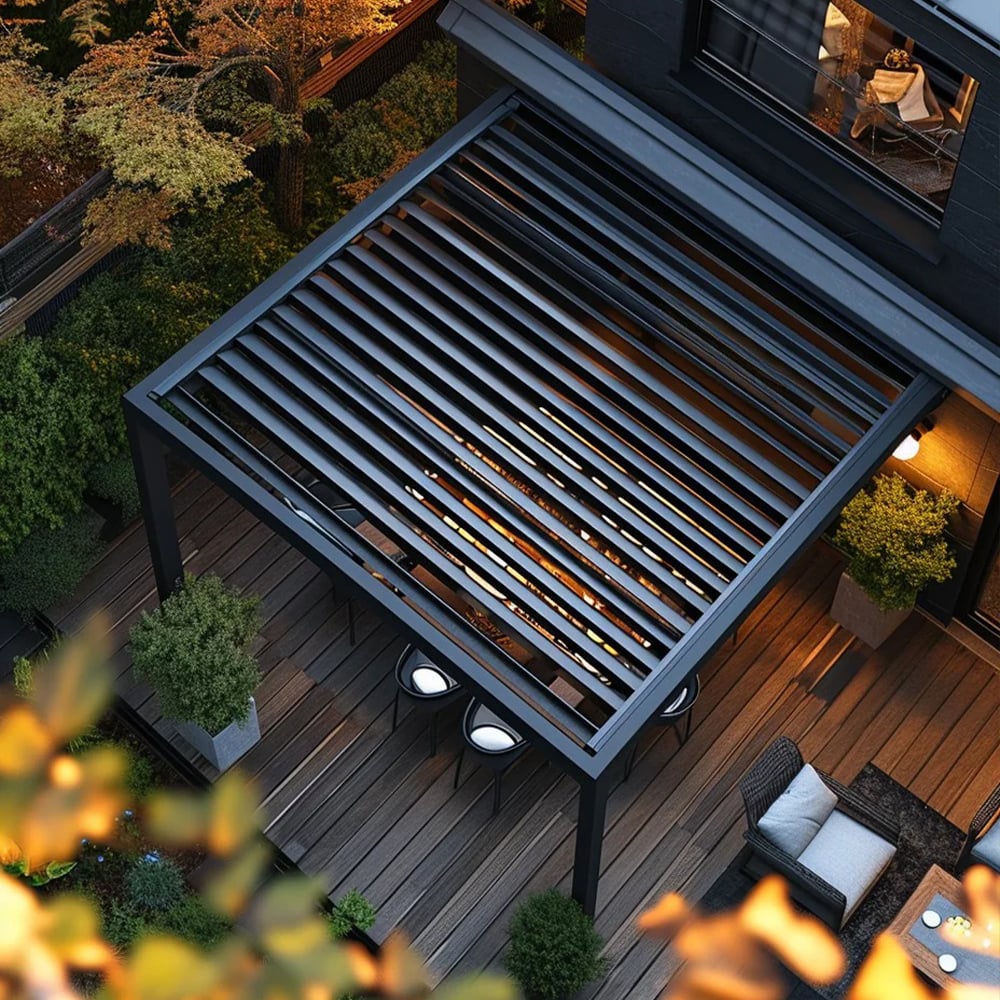
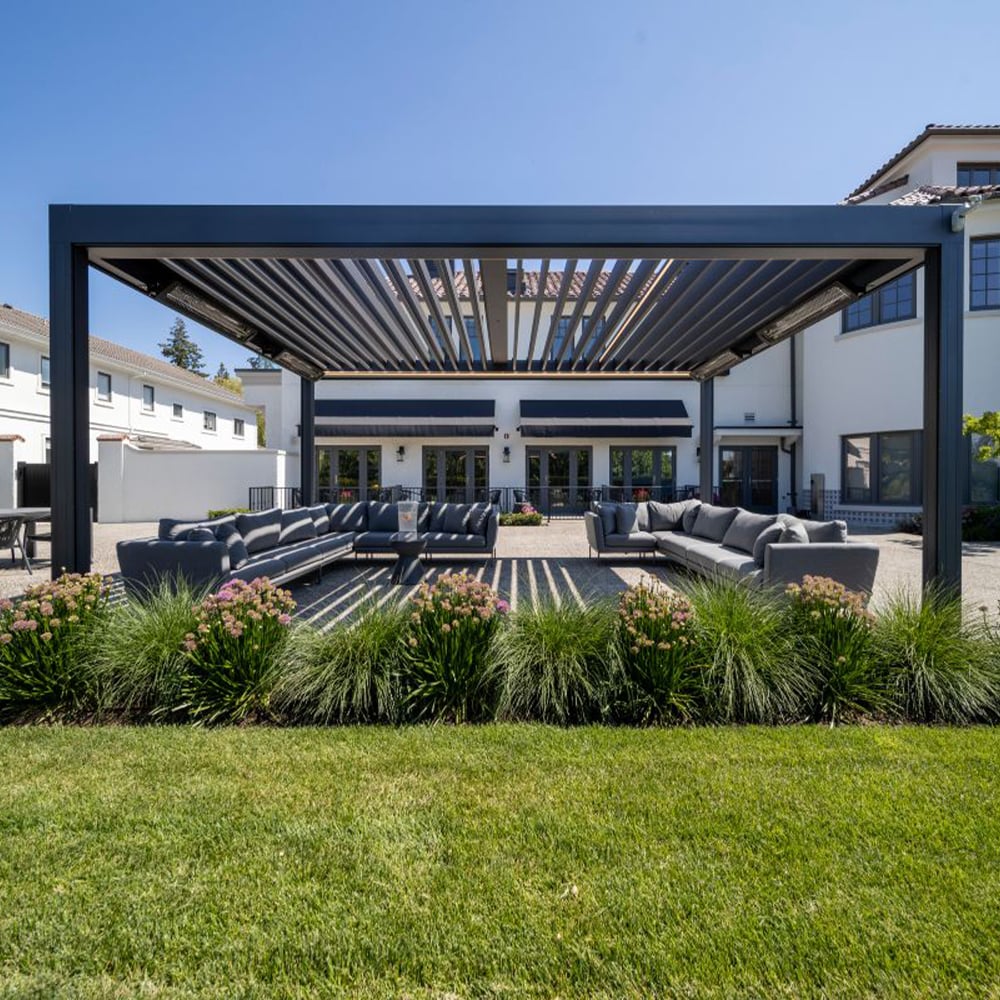
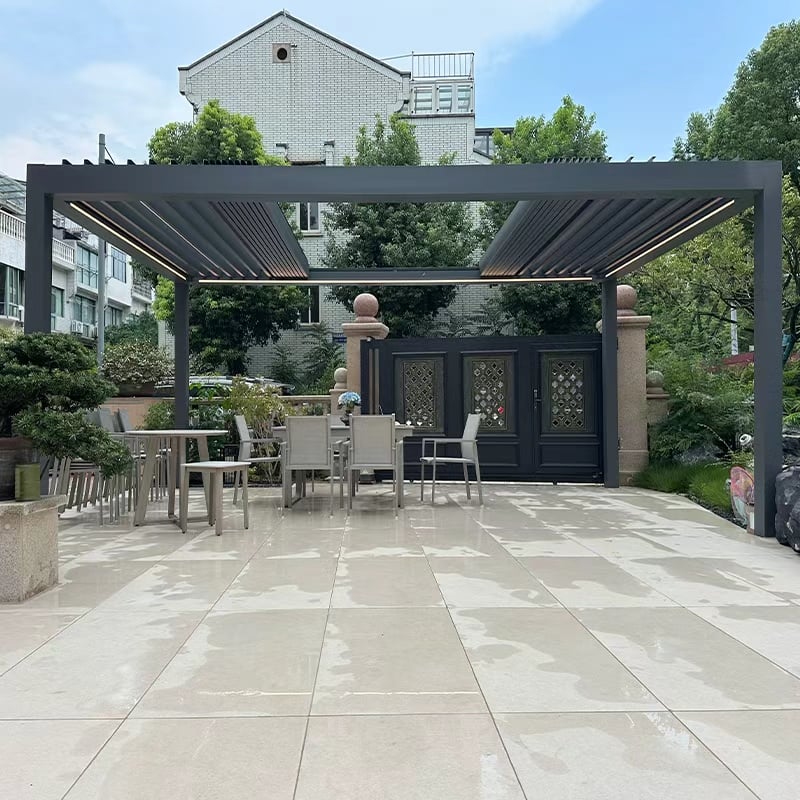
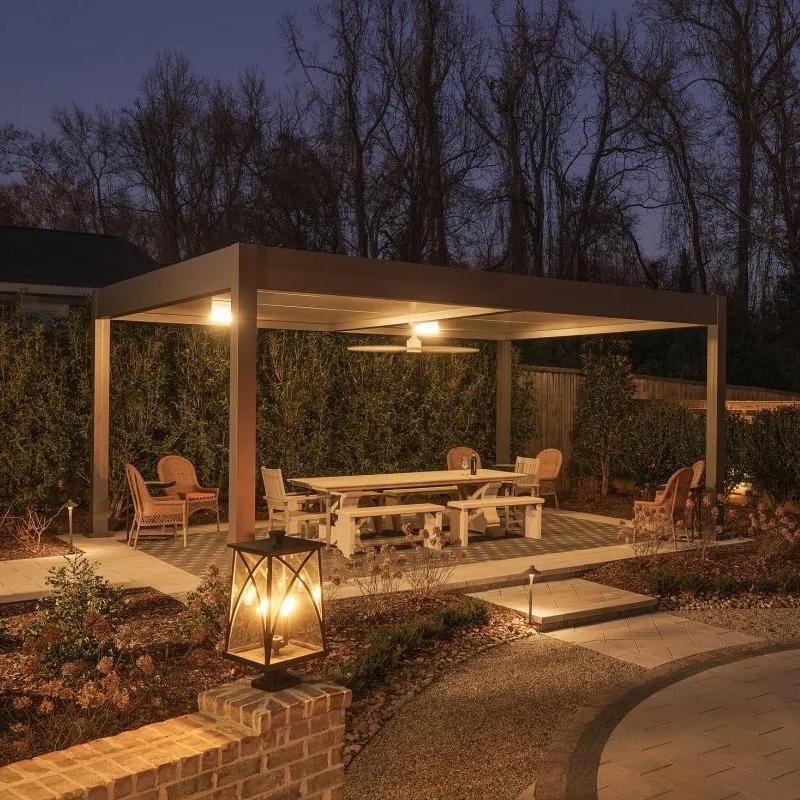
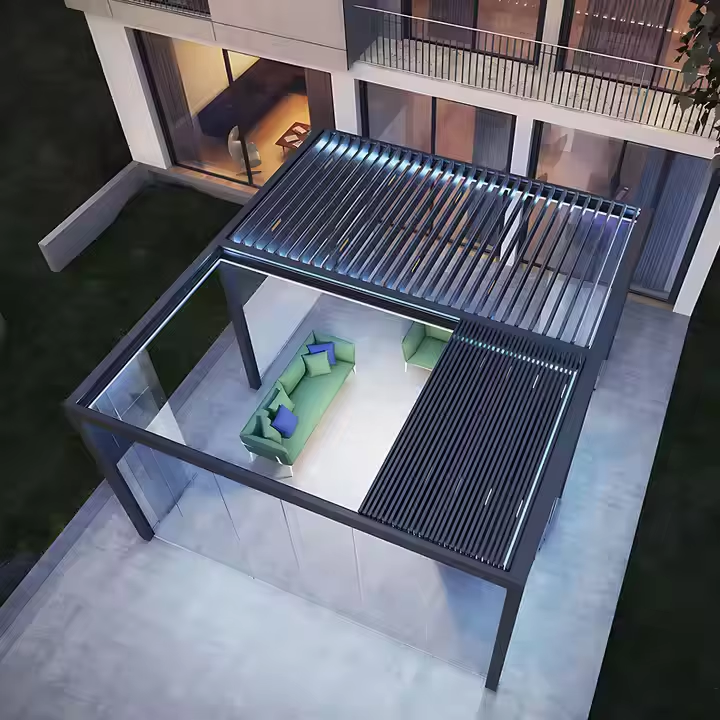
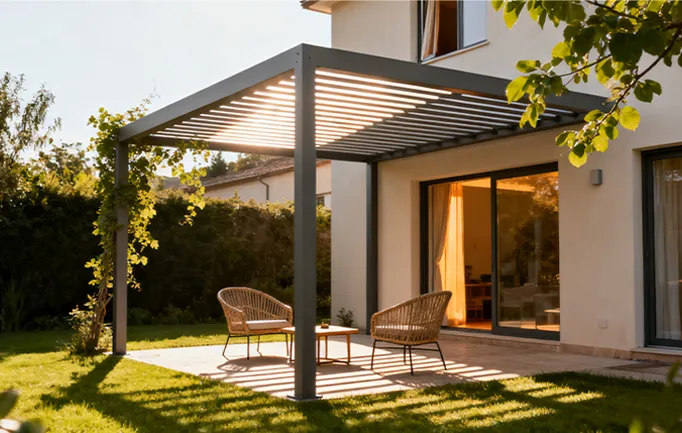
Zoned Lighting: Learn the art of "zoning." If you have an outdoor kitchen, use bright spotlights for the prep area. For the lounge area, use hidden LED strips. Let the light bounce off the louvers for that soft, misty glow—that’s true lifestyle.
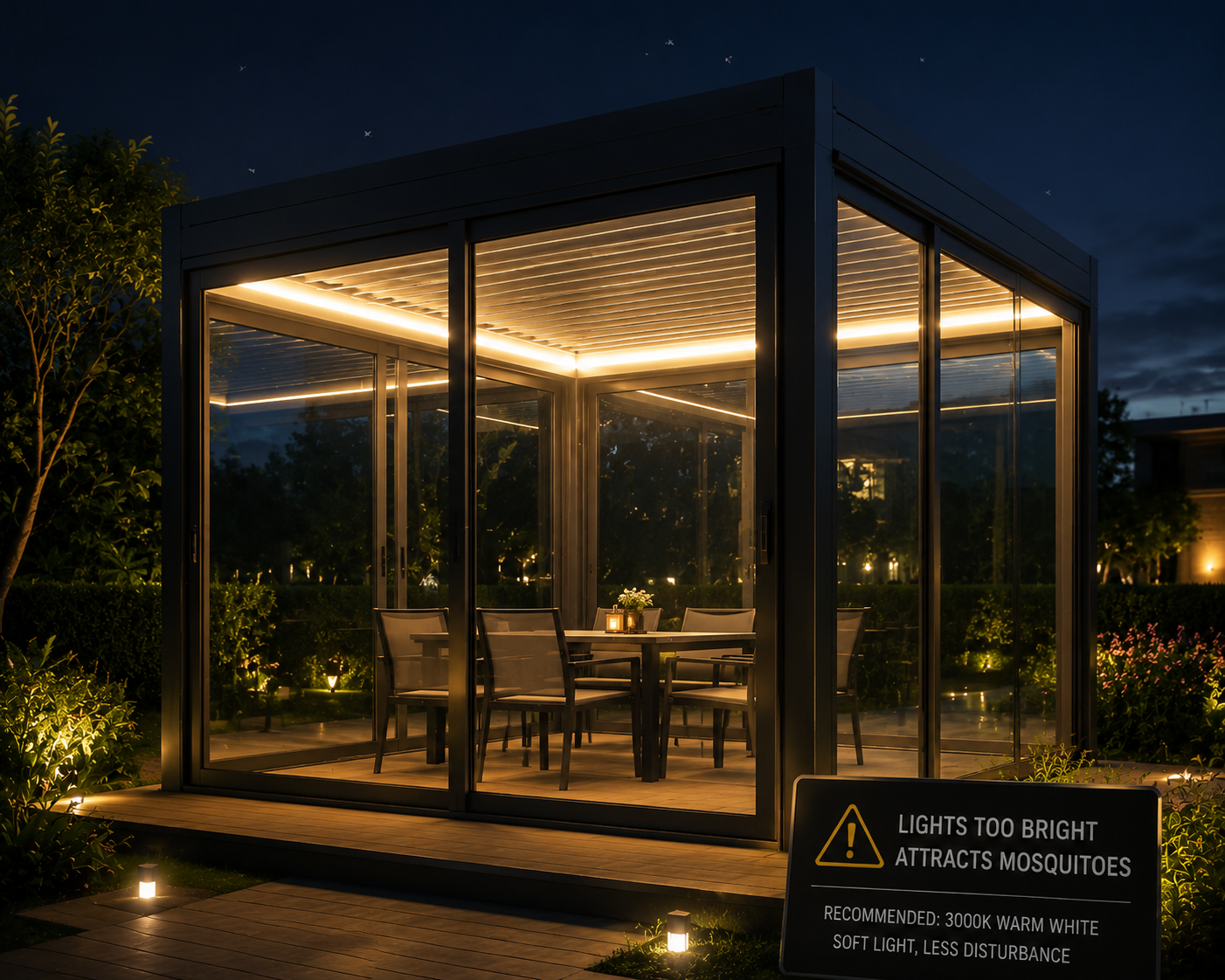
2. Side Enclosures: Zip Screens, Glass, or Louvers? Don't Waste Money
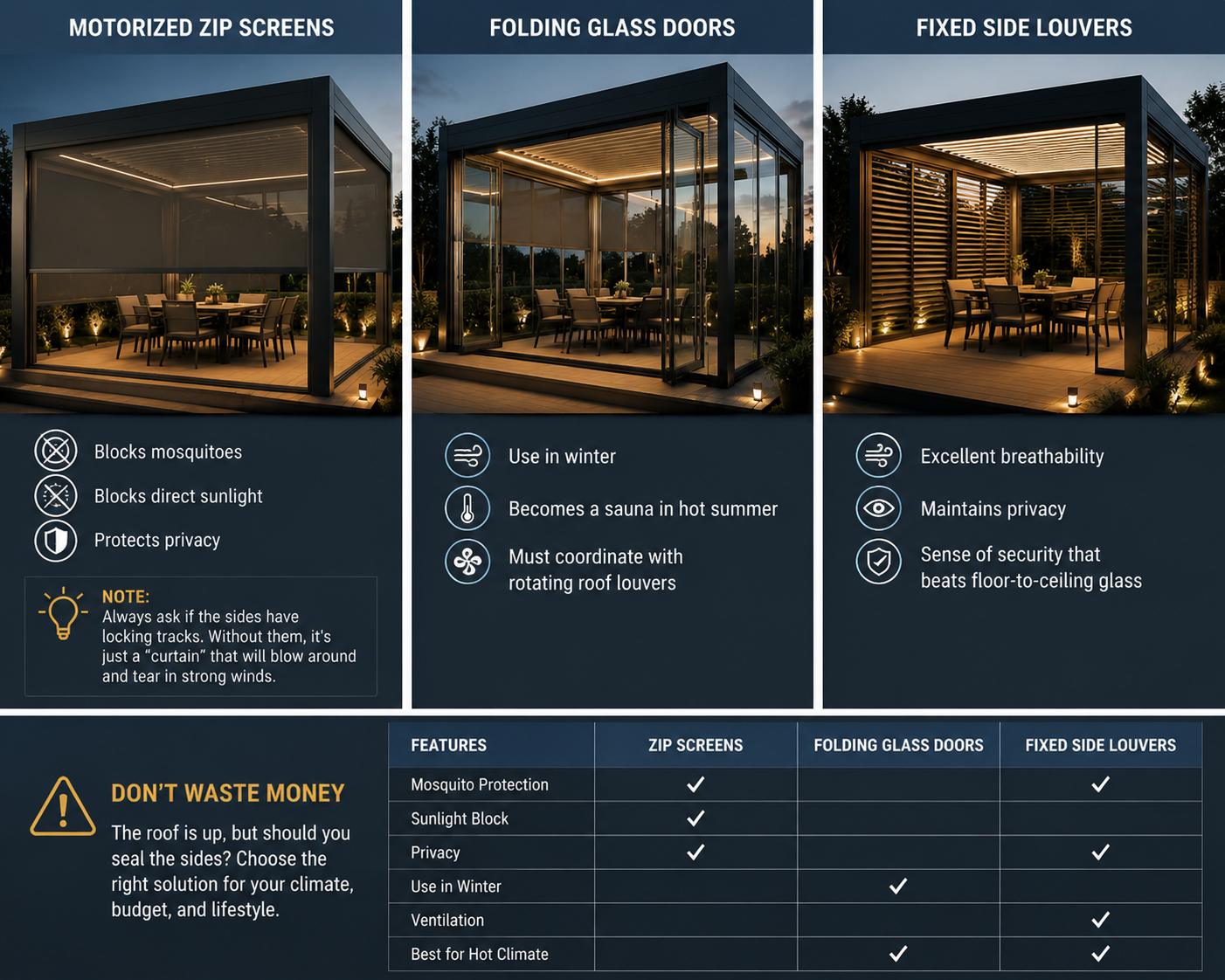
The roof is up, but should you seal the sides? This is the most debated part. Many leave it open to save money, only to face mosquito bites in summer and freezing wind in winter.
Motorized Zip Screens: This is the most cost-effective option. It blocks mosquitoes, direct sunlight, and protects privacy. Note: Always ask if the sides have locking tracks. Without them, it’s just a "curtain" that will blow around and tear in strong winds.
Folding Glass Doors: If you want to use the pergola in winter, you need glass. However, if your city is extremely hot in summer, a glass room becomes a sauna. In that case, you must coordinate it with rotating roof louvers to exhaust the heat.
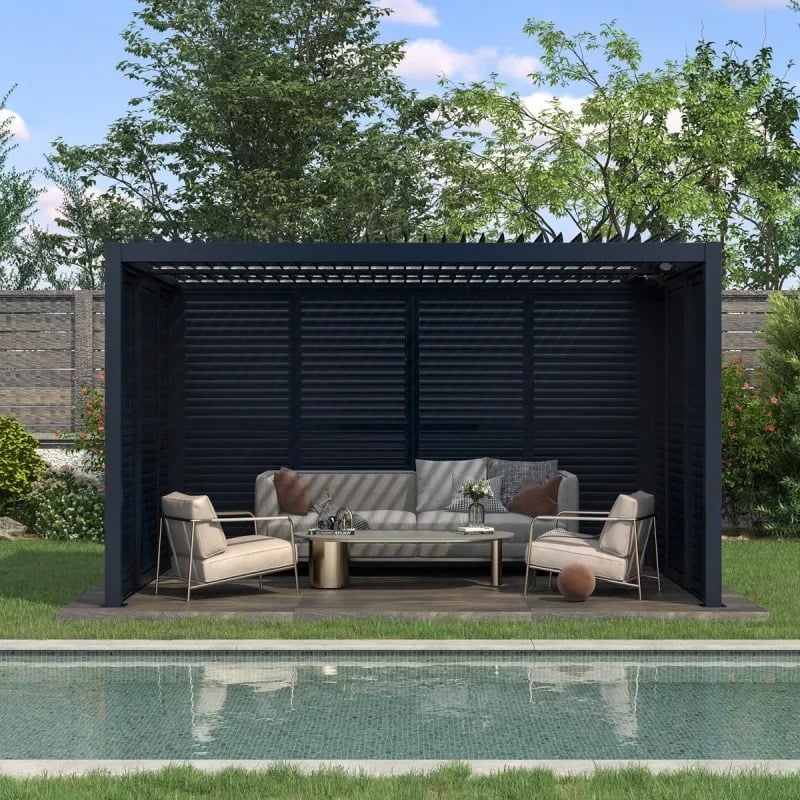
Fixed Side Louvers: If your yard is close to neighbors, fixed louvers are superior. They provide breathability without sacrificing privacy—a sense of security that beats floor-to-ceiling glass.
3. Who Says Pergolas are "Cold Palaces" in Winter?
Many think pergolas are only for summer. In reality, an aluminum pergola is perfect for "all-season operation."
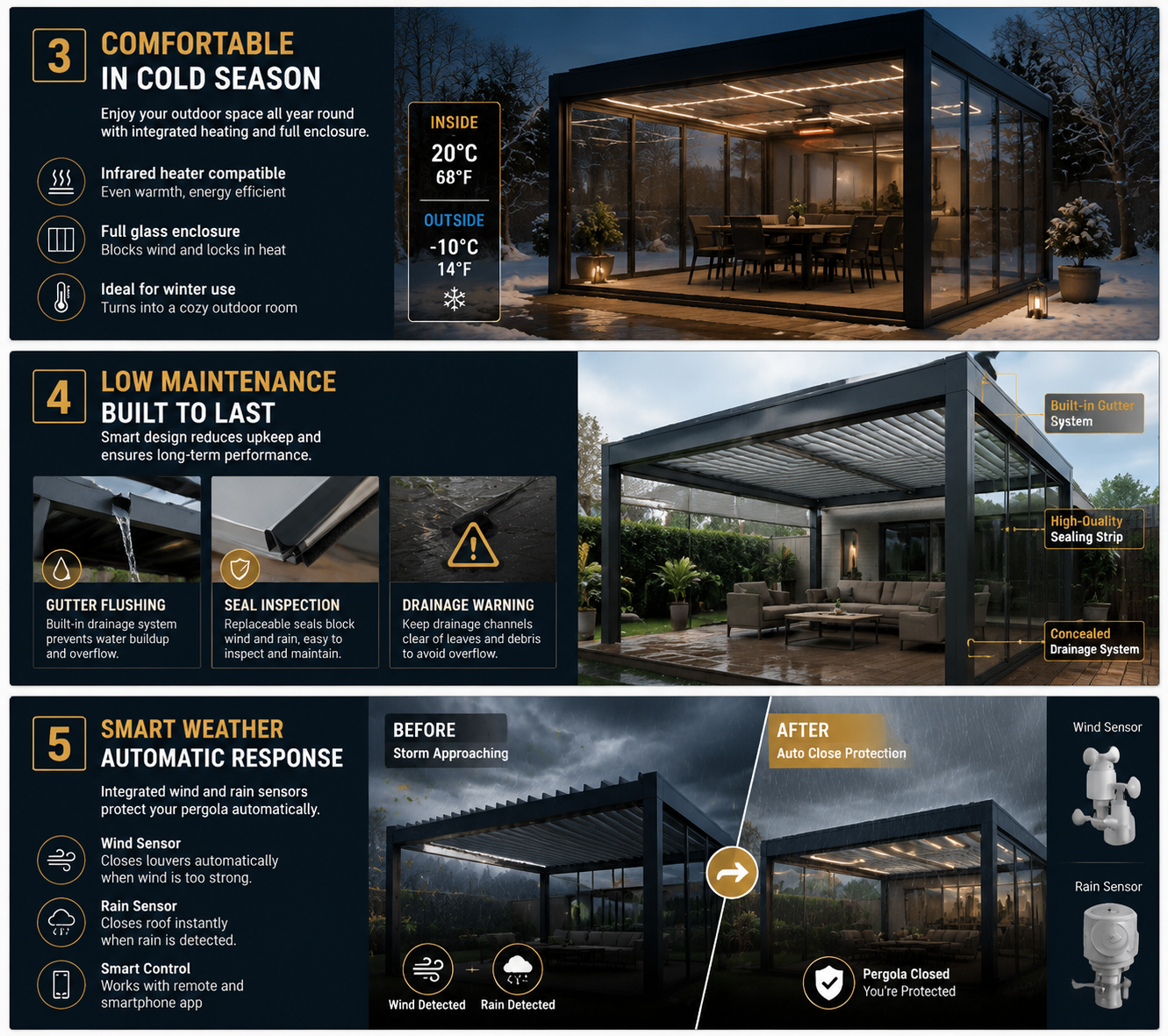
Besides adding glass, the simplest and most effective addition is a ceiling-mounted infrared heater. Forget the open-flame heaters unless you love the maintenance; go with electric radiant heat. Close the aluminum louvers, turn on the heater, and because aluminum has a natural heat-reflective property, the temperature inside can be 10 degrees higher than outside. Enjoying hot pot or coffee out there in winter makes every penny spent worth it.
---
4. The "Industry Secret" Manufacturers Don't Tell You: Maintenance
Many manufacturers claim "maintenance-free" pergolas. Aluminum doesn't rust or rot, but it does collect dust. Specifically, the top drainage gutters need attention. If you have trees nearby and don't clean the gutters for six months, rotting leaves will block the outlets, causing rain to leak through the louver gaps.
Gwei’s Maintenance Tips:
Flush the Gutters: Every six months, climb a ladder and flush the gutters with a water hose.
Seal Inspection: The sealing strips between louvers are consumables. High-quality ones last 10 years, but I recommend applying silicone oil every two years to prevent cracking. Good seals ensure you stay dry during a downpour.
---
5. The One Smart Sensor You MUST Install
Is a "Wind and Rain Sensor" a gimmick? I'm telling you: a Wind Sensor is absolutely worth it.
If you leave for work with the louvers closed and a sudden storm hits, the wind creates massive pressure on the structure. With a wind sensor, once the wind hits a certain speed, the louvers automatically open to release the pressure, allowing the wind to pass through. This is the ultimate guarantee that your pergola will last 30 years without structural damage.
---
Gwei’s Final Thought:
Outdoor space is for living, not just for looking. Forget the high-end jargon. When you sit there on a Saturday afternoon, ask yourself: is the sun stinging your eyes? Is the wind too cold? That’s what matters.
If you're struggling with side enclosures or lighting, send me a message. I don't just sell pergolas; I want you to truly love living in your yard.

 Hot News
 EN
EN