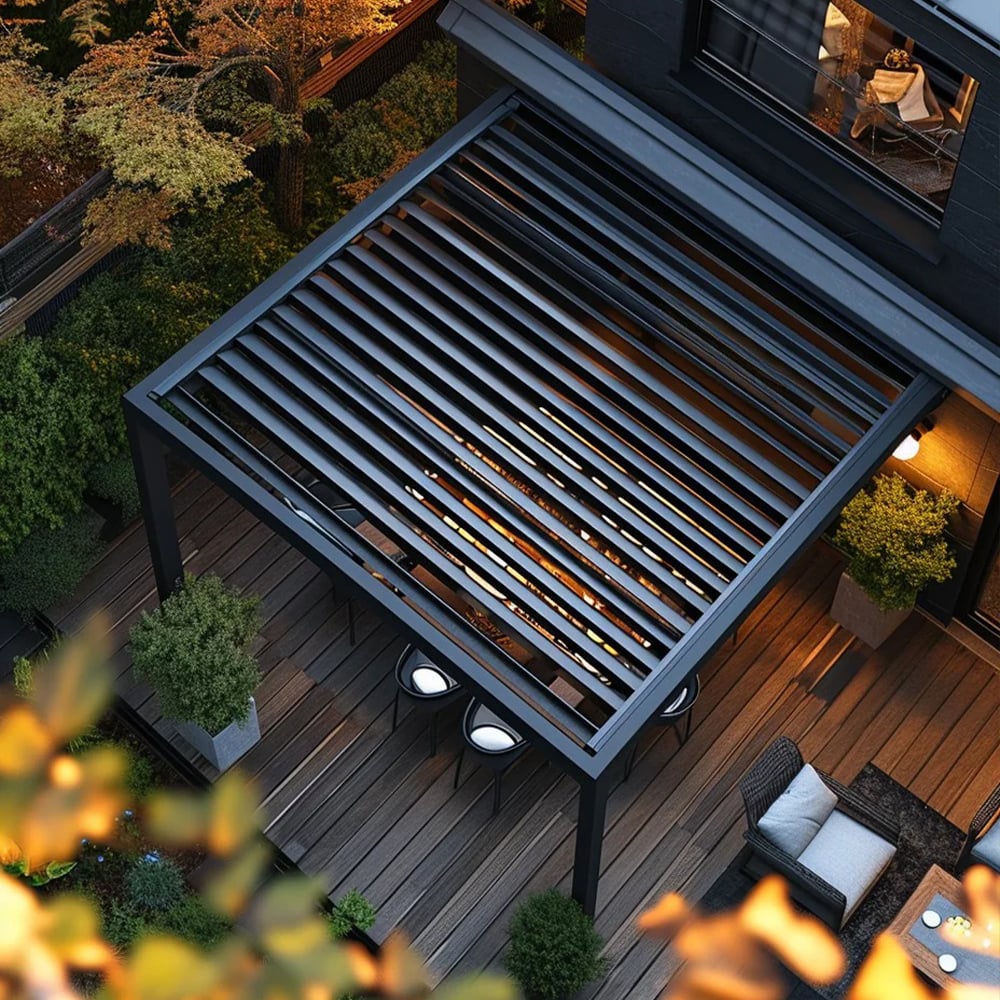
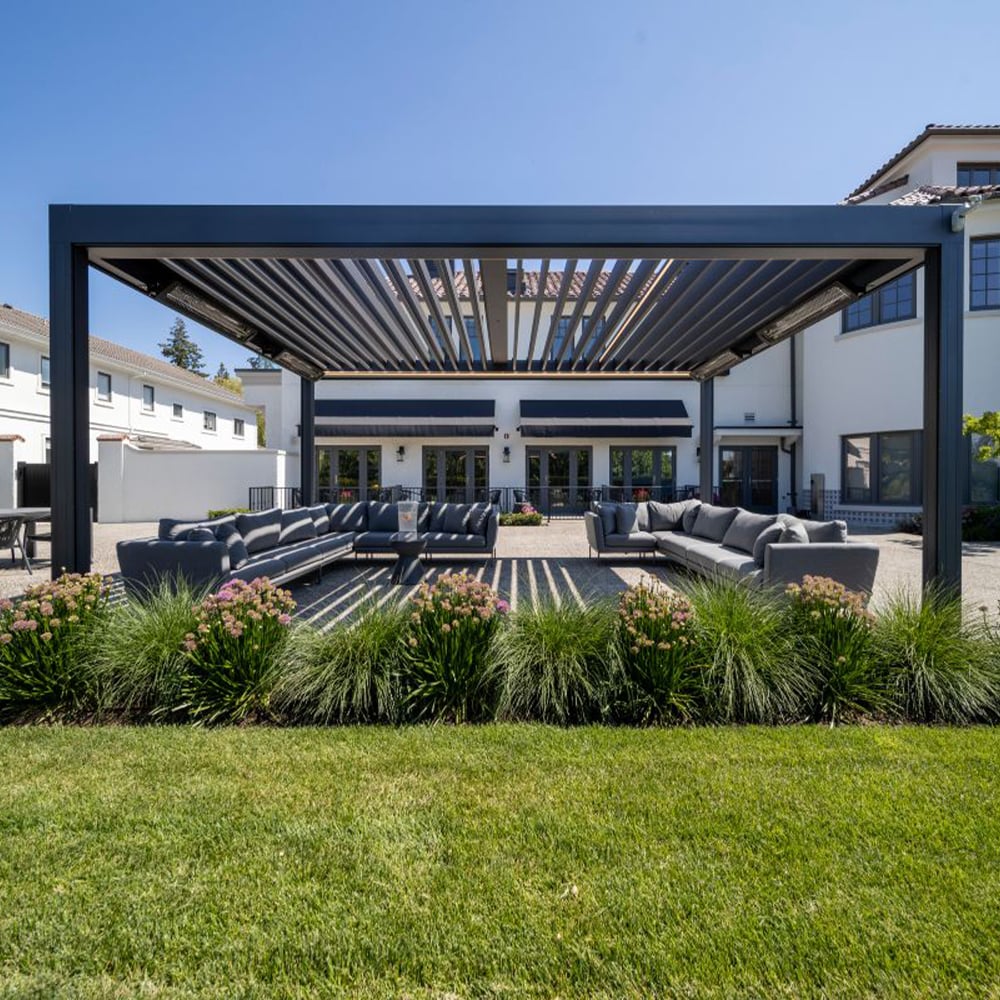
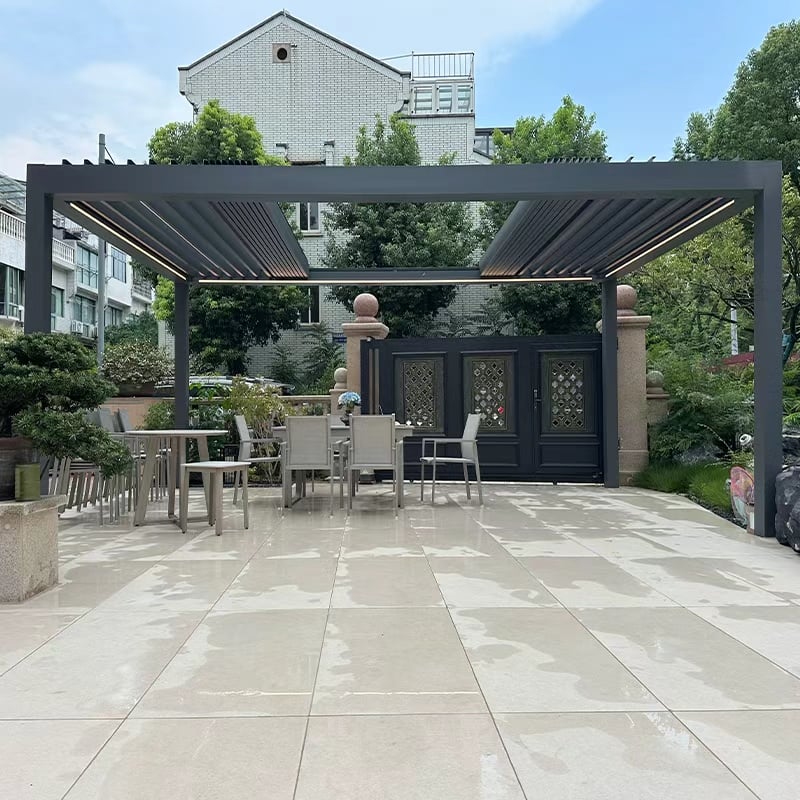
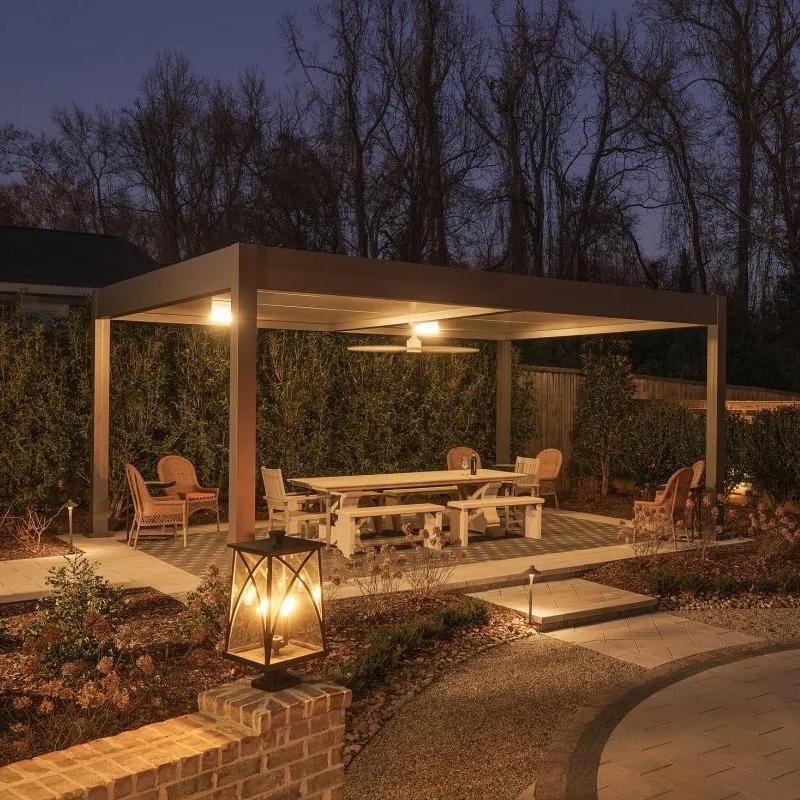
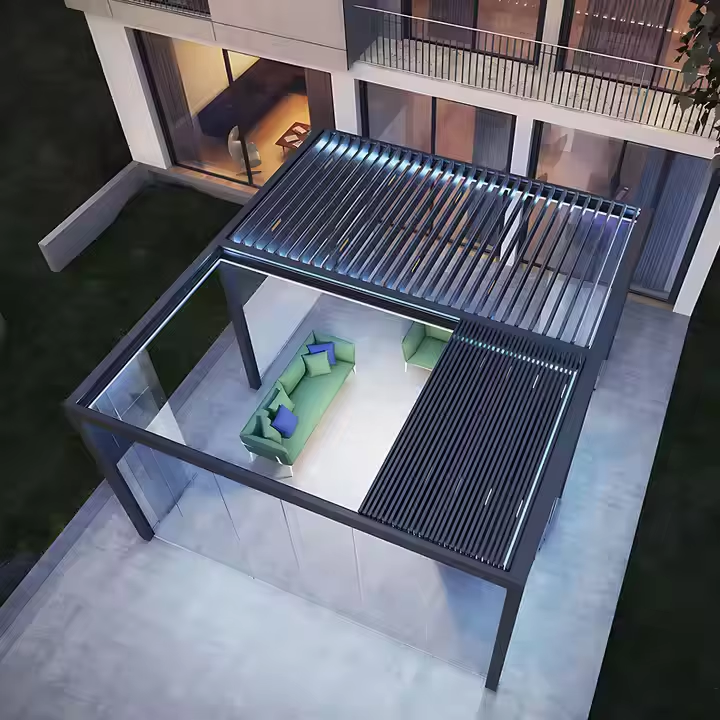
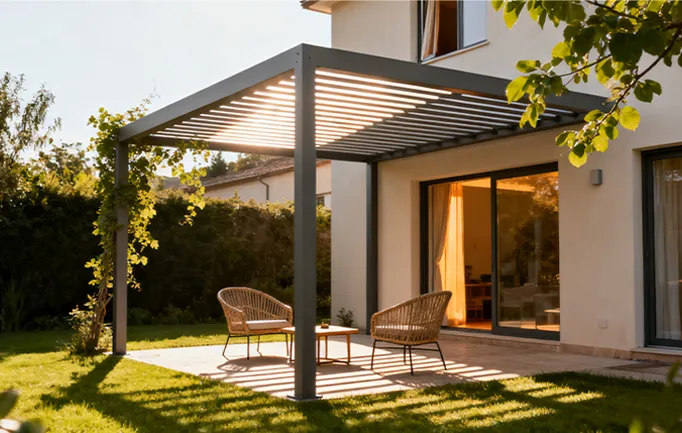
Տարածքի լուսավորման գոտիավորում. Տիրապետեք «գոտիավորման» արվեստին: Եթե ձեր արտաքին խոհանոցում կա պատրաստման գոտի, օգտագործեք պայծառ սփոտլայթեր: Հանգստի գոտում օգտագործեք թաքնված LED լուսաշղթաներ: Թույլ տվեք լույսին արտացոլվել լուվերներից՝ ստանալու այդ փափուկ, մառախլային փայլը, որն իրական կյանքի ոճ է:
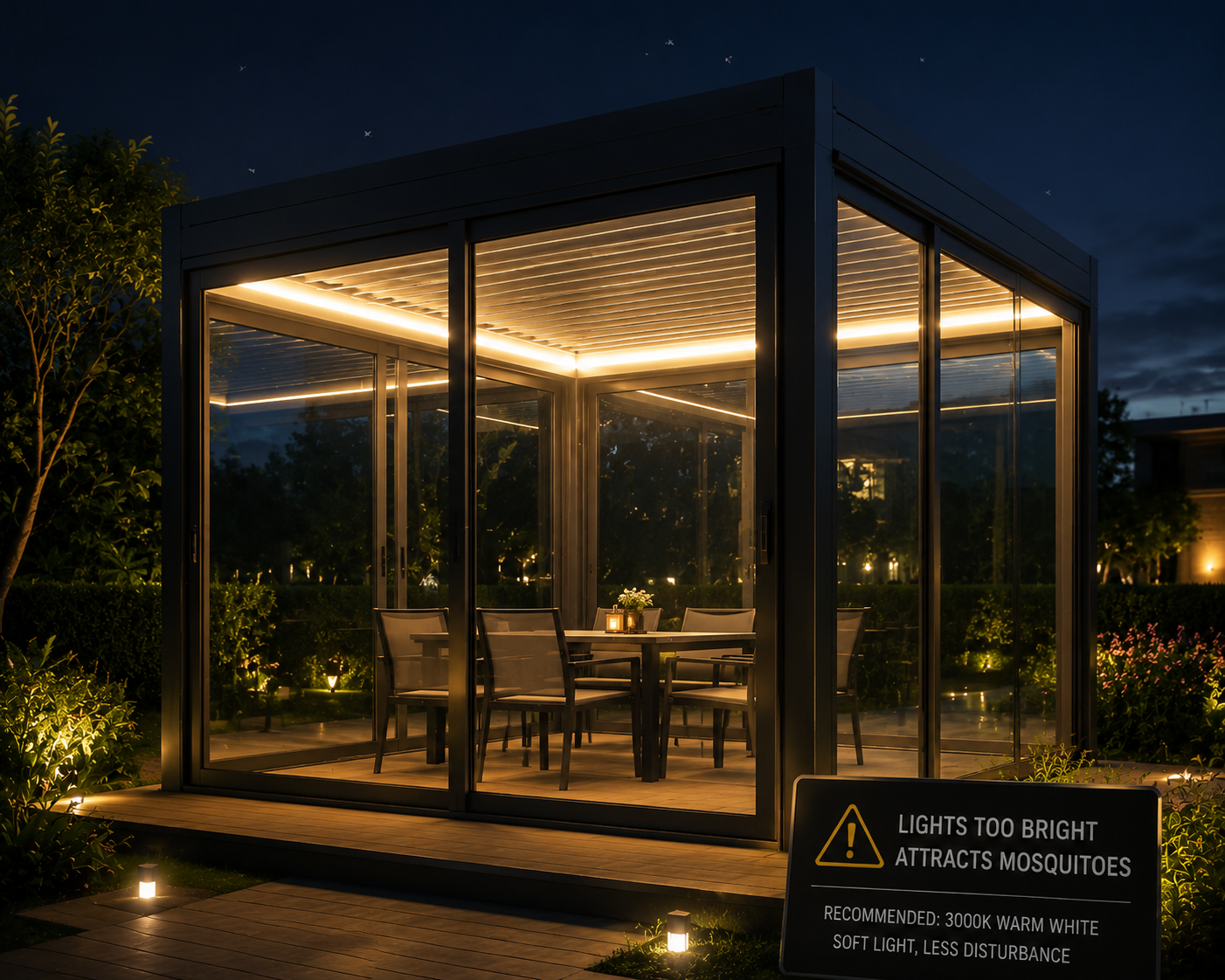
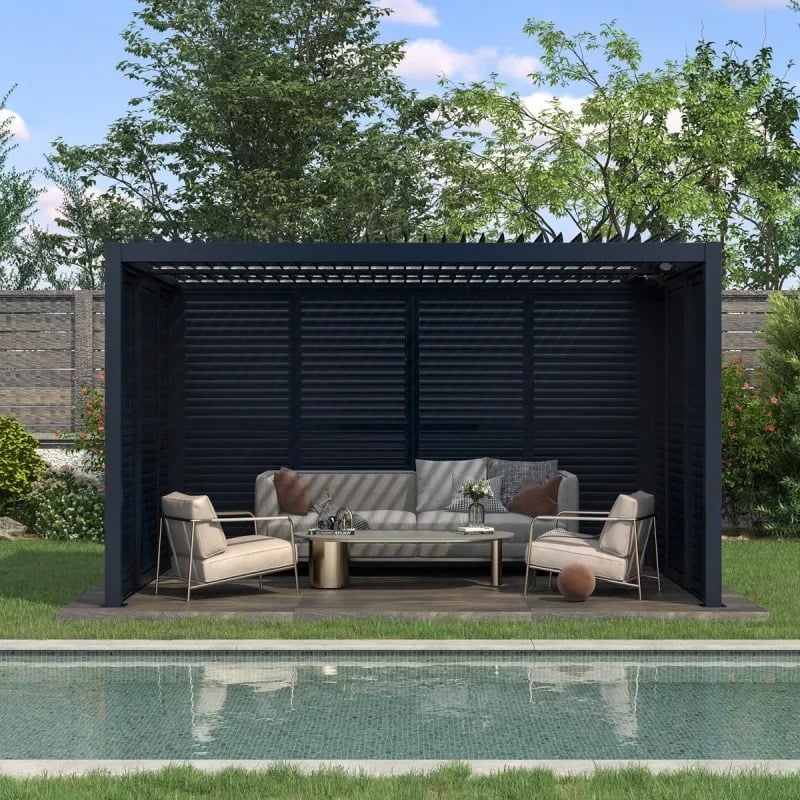
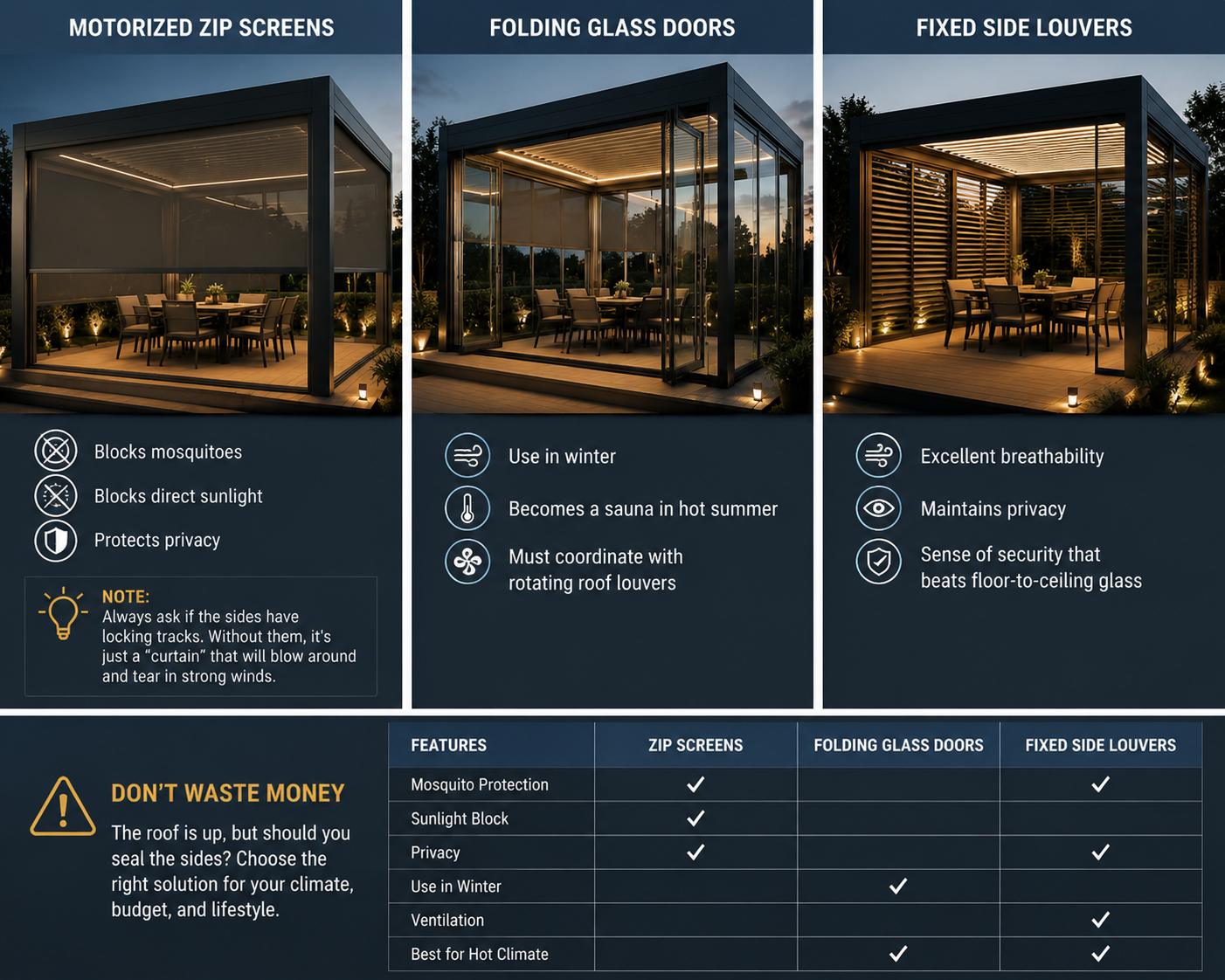
2. Կողային փակումներ. Զիպ-էկրաններ, ապակի կամ լուվերներ: Չկորցրեք գումարը
Սավառնակի ծածկը բարձրացված է, սակայն արդյոք պետք է փակել կողային մասերը։ Սա ամենաշատ քննարկվող մասն է։ Շատերը թողնում են այն բաց՝ գումար խնայելու համար, սակայն այդ դեպքում ամառը մարդիկ միջատների կծոցների են ենթարկվում, իսկ ձմեռը՝ սառը քամու։
Մեխանիզացված մետաղալարային վերակալներ. Սա ամենատնտեսական տարբերակն է։ Այն արգելափակում է միջատներին, ուղիղ արեւի ճառագայթները և ապահովում մասնավորությունը։ Ուշադրություն. Միշտ հարցրեք՝ արդյոք կողային մասերը ունեն ամրացման հենարաններ։ Դրանց բացակայության դեպքում դա պարզապես «վերակալ» է, որը քամու ժամանակ կշարժվի և կտրվի։
Բացվող ապակե դռներ. Եթե ցանկանում եք սավառնակը օգտագործել ձմեռը, ապա անհրաժեշտ է ապակին։ Սակայն, եթե ձեր քաղաքը ամառը շատ տաք է, ապակե սենյակը վերածվում է սաունայի։ Այդ դեպքում անհրաժեշտ է այն համատեղել պտտվող տանիքի լավերների հետ՝ տաք օդը դուրս բերելու համար։
Ամրացված կողային լավերներ. Եթե ձեր բակը մոտ է հաсосների տանը, ապա ամրացված լավերները ավելի լավ են։ Դրանք ապահովում են օդի շրջանառությունը՝ չզիանելով մասնավորությունը, ինչը ապահովում է ավելի մեծ անվտանգության զգացում, քան հատակից մինչև առաստաղ ձգվող ապակե պատերը։
3. Ո՞վ է ասում, որ սավառնակները ձմեռը «սառը պալատներ» են։
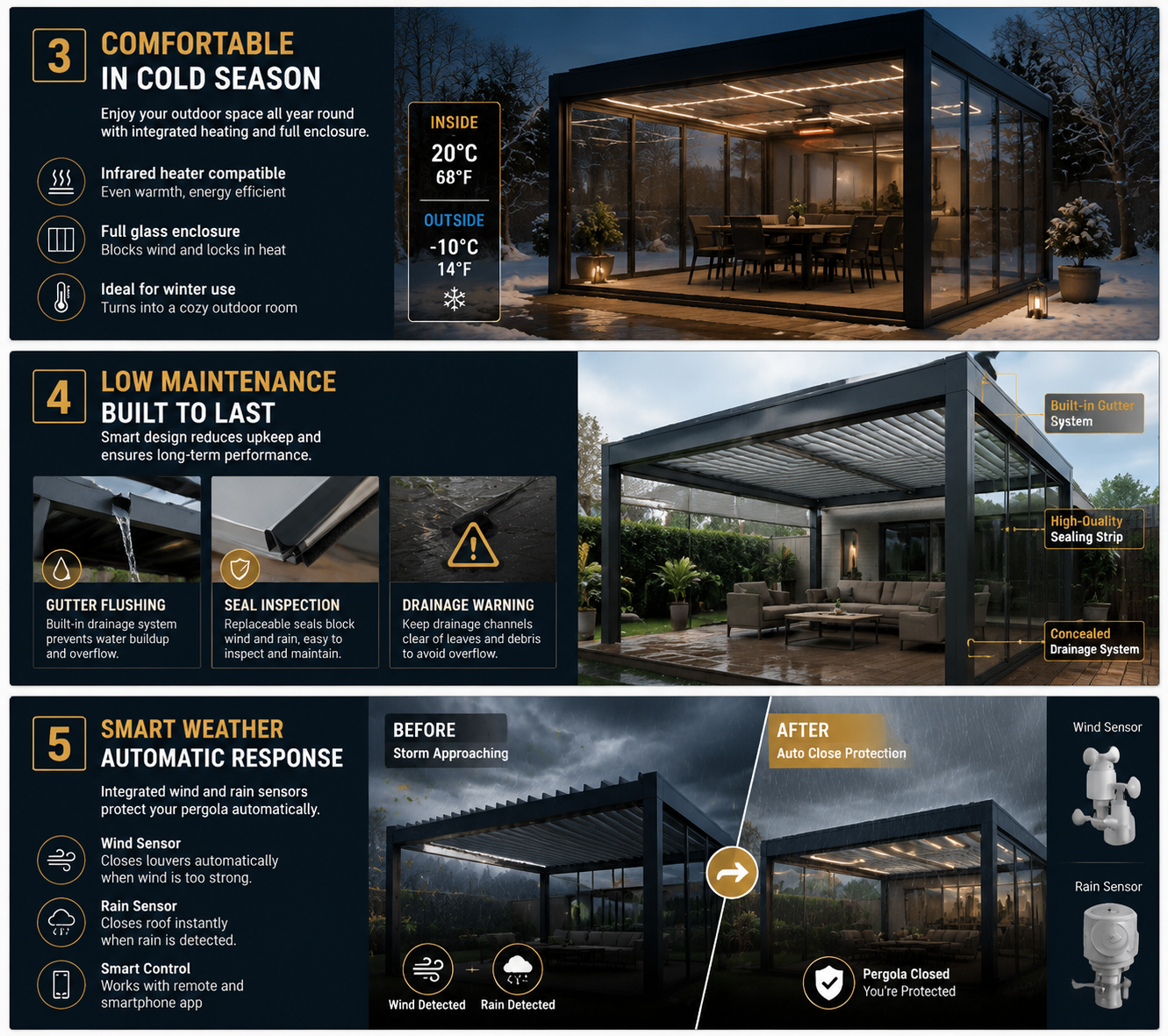
Շատերը կարծում են, որ պերգոլաները միայն ամառվա համար են։ Իրականում ալյումինե պերգոլան համապատասխանում է «տարվա բոլոր եղանակներին»։
Բացի ապակու ավելացմանից՝ ամենապարզ և ամենաարդյունավետ լ допոլումը առաստաղին մոնտաժված ինֆրակարմիր ջերմատաքացուցիչն է։ Մոռացեք բաց բոցով ջերմատաքացուցիչների մասին, եթե չեք սիրում սպասարկման աշխատանքները. ընտրեք էլեկտրական ճառագայթային ջերմատաքացուցիչները։ Փակեք ալյումինե լավերները, միացրեք ջերմատաքացուցիչը, և քանի որ ալյումինը բնական ջերմարտարտադրող հատկություն ունի, ներսում ջերմաստիճանը կարող է 10 աստիճանով բարձր լինել արտաքինից։ Ձմեռը տարածքում տաք սուփ կամ սուրճ սպասարկելը արժանացնում է ամեն մեկ դրամը։
---
4. Արդյունաբերության «գաղտնիքը», որը արտադրողները չեն ասում ձեզ՝ սպասարկումը
Շատ արտադրողներ պնդում են, որ պերգոլաները «առանց սպասարկման» են։ Ալյումինը չի կոռոզվում և չի փտում, սակայն վերածվում է փոշու կուտակման վայրի։ Մասնավորապես՝ վերին ջրահեռացման ավազանները պետք է ստուգվեն։ Եթե ձեր տարածքի մոտ ծառեր կան և վերին ավազանները վեց ամիս չեք մաքրել, փտած տերևները կարող են արգելափակել դրանց ելքերը, ինչը կառաջացնի անձրևի անցումը լավերների բացվածքներով։
Գվեյի սպասարկման համար տրված խորհուրդները։
Մաքրեք ջրահեռացման ավազանները. Յուրաքանչյուր վեց ամիսը մեկ բարձրացեք սանդուղքի վրա և ջրի շիթով մաքրեք ջրահեռացման ավազանները։
Սեղմանակների ստուգում. Լուսամուտների միջև եղող սեղմանակները օգտագործման ընթացքում մաշվող մասեր են։ Բարձրորակ սեղմանակները 10 տարի են ծառայում, սակայն խորհուրդ եմ տալիս յուրաքանչյուր երկու տարին մեկ սիլիկոնային յուղ օգտագործել՝ ճեղքվելը կանխելու համար։ Լավ սեղմանակները երաշխավորում են, որ անձրևի ժամանակ չեք թրջվի։
---
5. Այն մեկ ինտելեկտուալ սենսորը, որը պարտադիր է տեղադրել
«Քամու և անձրևի սենսորը» միայն մոդայական առարկա՞ է։ Ես ձեզ ասում եմ՝ քամու սենսորը անկասկած արժե իր արժեքը։
Եթե աշխատանքի գնալու պահին լուսամուտները փակ են, իսկ հանկարծ սկսվում է ամպրոպ, ապա քամին մեծ ճնշում է ստեղծում կառուցվածքի վրա։ Քամու սենսորի առկայության դեպքում, երբ քամու արագությունը հասնում է որոշակի սահմանի, լուսամուտները ավտոմատ բացվում են՝ ճնշումը թուլացնելու և քամուն անցնելու համար։ Սա ձեր պերգոլայի 30 տարի առանց կառուցվածքային վնասվածքների ծառայելու վերջնական երաշխիքն է։
---
Գվեյի վերջնական մտքը՝
Արտաքին տարածքը նախատեսված է ապրելու համար, ոչ թե միայն դիտելու։ Մոռացեք բարձր մակարդակի ժարգոնի մասին։ Երբ շաբաթվա այս օրը նստած եք այնտեղ՝ հարցրեք ինքներդ ձեզ. «Արևը արդյո՞ք այրում է ձեր աչքերը։ Քամին արդյո՞ք չափից շատ սառը է»։ Դա է կարևորը։
Եթե դժվարանում եք կողային փակումների կամ լուսավորության հետ, ուղարկեք ինձ հաղորդագրություն։ Ես ոչ միայն պերգոլաներ եմ վաճառում, այլ ցանկանում եմ, որ դուք իսկապես սիրեք ձեր բակում ապրելը։

 Թեժ նորություններ
 EN
EN