 EN
EN
Shade Control Made Easy with Rotating Louvers
Sunlight Control and Glare with Louvers
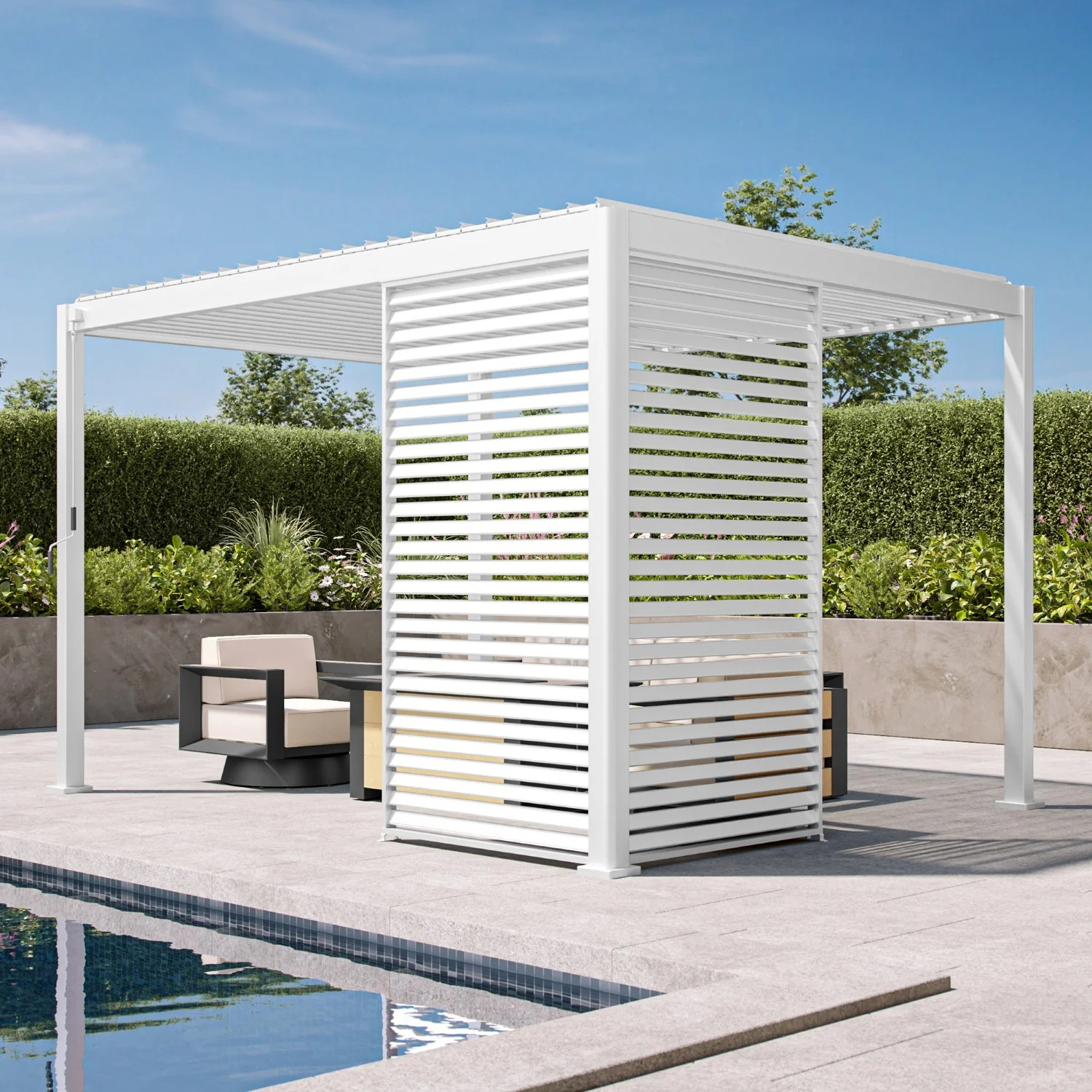
Thanks to separately rotating louvers, adjustable pergola louvres give users more control over their outdoor spaces. For example, louvers rotated to 60 to 90 degrees will reduce the amount of direct sunlight allowed through the louvres by about 95%. This can reduce glare on outdoor screens and protect users from UV rays, yet still provide the benefits of natural sunlight to the space. The louvers can be rotated to more moderate angles of 15 to 45 degrees to provide a space with more natural light. Also, louvers can be rotated to reduce the risk of heat build up by creating a shaded area. Because the sun changes positions throughout the day and year, adjustable louvers are extremely beneficial. For example, the softer morning light can be let into the space, yet the louvers can be rotated to block the more intense light from the afternoon sun. Fixed shaded structures don't provide this control. Fully adjustable louvres make outdoor spaces more comfortable and usable throughout the year, as they can eliminate hot spots and provide enough light to the space.
Seasonal Adjustment: Maximizing Shade in Summer, Solar Gain in Winter
Louver pergolas adjust with the changing weather. In the summer, the pergola blades can be mostly horizontal, which blocks the overhead sun, cutting surface temperatures by 8 to 12 degrees Celsius compared to areas without shade. In the winter, fully opened louvers let in the sun, which is lower in the sky and increases temperatures by 5 to 7 degrees Celsius. In the spring and summer some users adjust the louvers to suit their needs. This keeps protected areas comfortable and extends the use of outdoor areas while minimizing the use of heating and cooling systems.
Dynamic Ventilation Management via Intelligent Louver Positioning
Utilizing the Chimney Effect and Cross-Ventilation Through Louver Positioning
Adjustable louver fins not only provide sun protection; they also can influence the movement of air in a space. For example, if louver fins are angled upwards, the warm air is able to escape through the openings, and more cool air is drawn in from below. The airflow in the room is improved when louver fins are positioned sideways. In the study of airflow direction, louver fins directed airflow to the needed areas. According to ASHRAE, optimal airflow is achieved (without drafts and removal of stagnant zones) when louver fins are set at a 45-deg angle. By proper design, a building’s reliance on mechanical systems (fans, HVAC) can be minimized.
Humidity-Adaptive Ventilation: Evaporative Cooling in Warm, Humid Climates
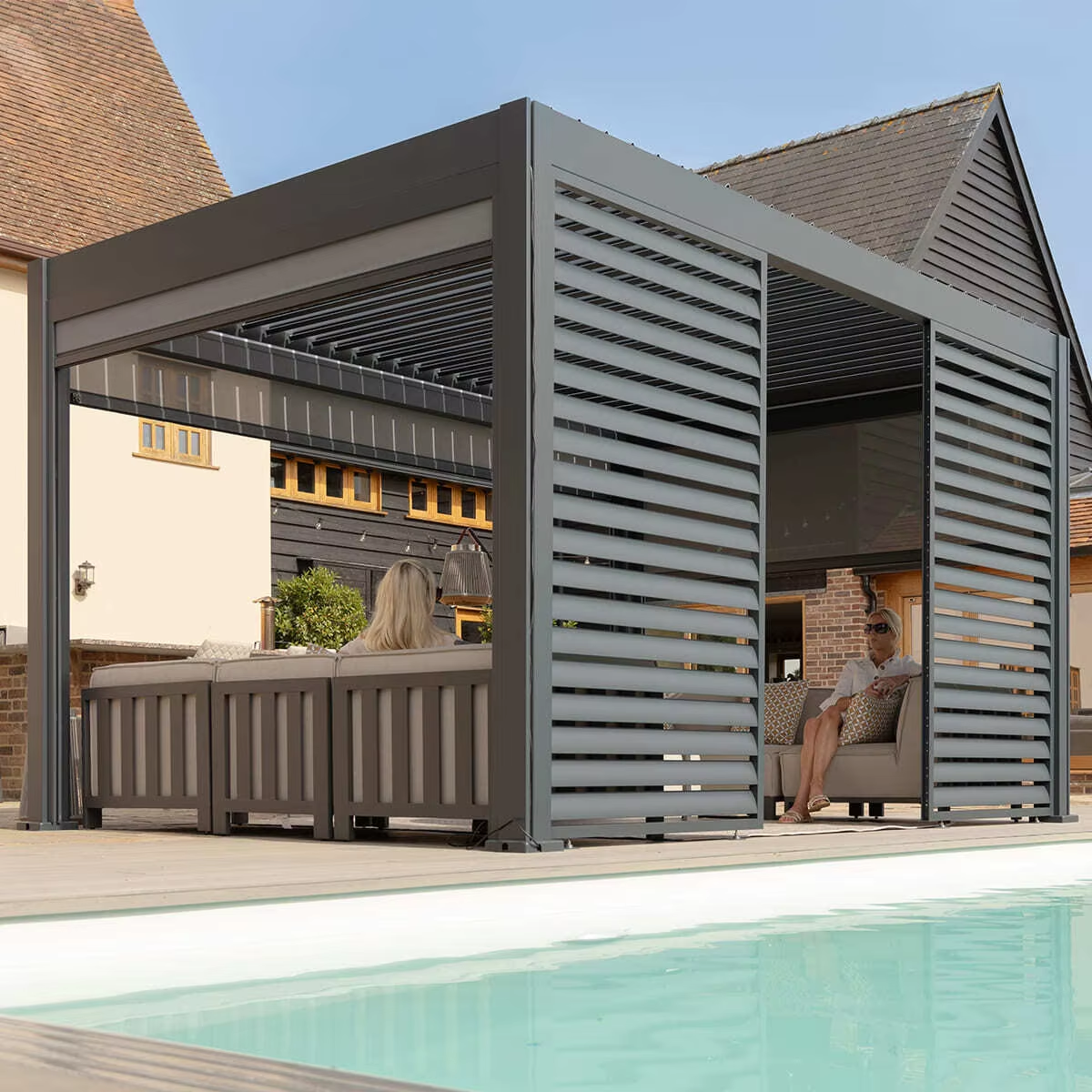
In the moisture-rich regions, louver pergolas assist in evaporative cooling as they facilitate air movement. With louvres set to around 15 to 30 degrees, the air created over the body surface will enhance evaporation. Reports in the Building and Environment journal state that such methods can result in a perceived temperature drop by as much as 7°F. The described openings complement the function as they offer passage for rain but prevent water intrusion. Additionally, newer louver systems come with built-in humidity sensors, enabling automatic adjustment of the open/close position of the louvres based on the existing and predicted weather. These sensors will trigger wider openings under drier conditions, with a closure near 65% humidity. This capability is critical to managing evaporative cooling to prevent condensation, enhancing pergola comfort.
Smart Climate Responsiveness with Motorized Louver Pergola Systems
Real-Time Adjustment: Impact of Open, Closed, and Intermediate Positions on Thermal Comfort
Motorized louver pergolas are able to respond to immediate weather changes and become a lot more than reactive shade, making outdoor comfort a lot more manageable. When completely open, air can flow through, helping with evaporative cooling, making them great for really humid places. Closing the units completely can block the heat of the midday sun, while still allowing some warmth to remain in the area in the colder months. The best thermal comfort is typically at about 30 to 60 degree adjustments where the louver blades are kept at great uv filtration without compromising on airflow.
Smart sensors automate the pergolas, closing them when it rains, opening them incrementally as the temperature rises, and ensuring the louvers stay closed when wind gusts are above 60 mph. This means that the pergolas can adjust to climate fluctuations on their own, ensuring airflow to eliminate overheating while providing comfort, and supporting all weather and all year rounds use.
Exceptional Provable Versatile Functionality and Utilization
Today’s advanced louvered pergolas beat out older models when it comes to withstanding the challenges posed by the most harsh and unpredictable climates, including extreme sun and rain, rapid temperature changes, and strong winds. These large outdoor structures use high-quality aluminum framework that sustains long-lasting corrosion resistance, and stainless steel hardware (often used in marine applications) to guarantee safety and longevity, as well as ease of use in all types of weather conditions. The pergolas’ louver blades are designed to resist water intrusion during storm events. They have channel-based water drainage systems designed to divert water away from sheltered use areas and toward areas where water is desired. They are perhaps uniquely positioned to provide shaded outdoor seating and activity areas. They provide outdoor spaces that can be used year-round and can be designed to be warmer and more comfortable in the winter than other outdoor spaces.
Unlike traditional pergolas, which you must disassemble or cover every year, louvered pergola systems can stay out even during the winter. You do not need to do anything special for winter storage. According to the National Association of Home Builders, louvered systems reduce the cost of maintenance by about 40% over the years. They can withstand snow loads and 60+ mph winds, so they can be used even in the winter. They adapt to any weather which makes it easier to use patios even during colder weather, where they can be closed until spring.
FAQ Frequently Asked Questions.
What do adjustable louvers do?
Adjustable louvers can be used for controlling sunlight, increasing or reducing glare, and controlling air flow. Different angles may be used to regulate sunlight or airflow.
How do louvered pergolas manage the different seasons?
In summer, louvered pergolas can lie flat to provide shade but in winter the slats can be fully opened to allow warm sunlight through. This makes sure there are comfortable temperatures during the different seasons.
What do motorized louver pergola systems do?
With motorized louver systems, you can make more adjustments to the pergola in order to have better temperature control by directing air better as well as controlling shade. Automated weather sensors may be able to do this without any control in order to make different areas comfortable.
How do louver pergolas save energy?
Louver pergolas decrease the need for additional cooling or heating by providing control over sunlight and airflow. Their ability to save energy and reduce maintenance costs allows homeowners to rely less on their HVAC systems.
Do louver pergolas offer longevity?
Absolutely, louver pergolas have longevity due to their high-quality materials, such as aluminum and stainless steel. Homeowners do not need to worry about seasonally disassembling or specially storing their pergolas as they will last through extreme rain, wind, and snow.