 EN
EN

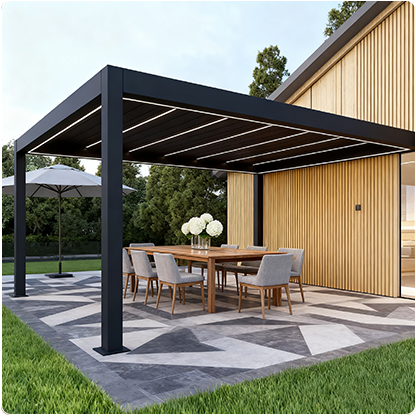
Minimalist Structure: Clean Lines and Uncluttered Form as Core Modern Pergola Identity
Why Simplicity Dominates Contemporary Outdoor Architecture
Modern outdoor design increasingly rejects ornamentation in favor of clarity. A modern pergola embodies this shift by stripping away unnecessary trim, curved beams, and decorative brackets—prioritizing proportion, balance, and intentional negative space. Straight, parallel lines and open spans reduce visual noise, allowing the structure to function as a natural extension of contemporary architecture rather than an afterthought. This approach aligns with broader landscape design principles that use minimalism to cultivate calm, order, and spatial coherence—core tenets emphasized in architectural guidance from the American Society of Landscape Architects (ASLA) and widely adopted in award-winning residential projects.
Functional Benefits of Minimalism: Spatial Expansion and Visual Lightness
Minimalism delivers measurable functional advantages beyond aesthetics. Slim-profile posts and open rooflines maximize sightlines and airflow while minimizing visual obstruction—making patios and gardens feel significantly larger, especially on compact urban lots. The uncluttered form also simplifies long-term maintenance: fewer crevices mean less debris accumulation and easier cleaning. When paired with concealed fasteners and integrated systems—such as recessed wiring for lighting or embedded motor housings—minimalist pergolas retain structural integrity and full functionality: adjustable shade, rain protection, and seamless smart-home compatibility—without compromising their light, airy presence.
Smart Louvered Roofs: The Defining Functional Feature of a Modern Pergola
Dynamic Shade Control — From Passive to Responsive Environmental Design
Modern pergolas distinguish themselves from traditional counterparts through motorized, rotating louvers—capable of 180-degree adjustment. This transforms outdoor spaces into responsive environments: homeowners can fine-tune sunlight penetration, direct airflow, or fully seal the roof against rain. Rain sensors trigger automatic closure to protect furnishings, while programmable schedules optimize thermal comfort throughout the day. According to a 2023 study published in Building and Environment, adaptive shading systems like these can reduce adjacent indoor cooling loads by up to 27%, extending outdoor usability and improving whole-home energy efficiency.
Seamless Smart Integration: Voice and App Control with Major Home Ecosystems
These systems integrate natively with leading smart home platforms—including Apple HomeKit, Amazon Alexa, and Google Home—enabling unified voice control, remote app access, and synchronized automation. Users can adjust louver angles, activate integrated LED lighting, or engage infrared heaters—all from a single interface. Environmental triggers (e.g., wind speed thresholds, UV index thresholds) further automate responses, enhancing safety and convenience without manual input. This level of interoperability reflects current UL 2043 and ANSI/CTA-2079 standards for outdoor smart-device certification, ensuring reliability and secure network communication.
Premium Materials and Advanced Finishes That Elevate Modern Pergola Aesthetics
The choice of materials and finishes defines both the character and longevity of a modern pergola. Designers prioritize options that combine structural performance, environmental resilience, and refined visual presence—ensuring decades of aesthetic consistency and functional reliability.
Aluminum as the Standard: Strength, Sustainability, and Sleek Profile
Aluminum is the dominant material for high-performance modern pergolas. Its exceptional strength-to-weight ratio enables slender, clean profiles and expansive spans—often exceeding 20 feet without intermediate supports—while resisting corrosion, warping, rot, and insect damage. Fully recyclable and requiring no staining or sealing, aluminum aligns with LEED v4.1 Material Disclosure and Optimization prerequisites. Industry-standard powder-coated finishes—tested to AAMA 2604 and AAMA 2605 specifications—provide lasting resistance to UV degradation, salt spray, and abrasion, preserving color fidelity and surface integrity across diverse climates.
Textured Finishes: Blending Warmth and Minimalism in Modern Pergola Design
Advanced powder-coating technologies now offer textured surfaces—such as subtle wood-grain, brushed metal, or matte stone effects—that add tactile depth without sacrificing durability. These finishes diffuse light gently, reducing glare and enhancing dimensional interest across large, flat planes. Crucially, texture improves scratch concealment compared to high-gloss alternatives, supporting long-term visual performance. Unlike laminates or veneers, these coatings are integral to the substrate, maintaining consistent appearance even after decades of exposure—validated through accelerated weathering tests per ASTM G154.
Architectural Integration: How Modern Pergolas Extend Living Space with Intentional Stylistic Harmony
Modern pergolas transcend decorative function to become deliberate architectural extensions—blurring boundaries between interior and exterior living. Strategically placed adjacent to kitchens, great rooms, or primary bedrooms, they define usable outdoor “rooms” for dining, lounging, or entertaining, effectively expanding a home’s functional footprint. Success hinges on stylistic continuity: matching proportions, material palettes (e.g., coordinating with cladding or window frames), and finish tones ensures visual cohesion. As noted in the 2022 Residential Design Handbook from the American Institute of Architects (AIA), well-integrated pergolas increase perceived property value by reinforcing spatial flow and lifestyle flexibility—transforming underutilized yards into purposeful, year-round living zones.
FAQ
What are the main features of a modern pergola?
A modern pergola emphasizes minimalist design with clean lines and functional elements like motorized louvered roofs for dynamic shade control and smart-home integration. It also focuses on premium materials like aluminum to ensure durability and sleek aesthetics.
How does a louvered roof benefit a modern pergola?
A louvered roof provides adjustable options for sunlight, airflow, and rain protection. It can enhance usability by responding to environmental triggers like rain sensors or programmable schedules, improving overall comfort and energy efficiency.
Why is aluminum considered the ideal material for modern pergolas?
Aluminum's strength-to-weight ratio allows thin profiles and long spans to be created while resisting environmental issues like rust, rot, and warping. Furthermore, aluminum is recyclable and requires minimal maintenance.
Do modern pergolas integrate with smart home systems?
Yes, modern pergolas can integrate seamlessly with platforms like Apple HomeKit, Amazon Alexa, and Google Home. Features such as adjustable louvers, lighting, and heaters can be controlled via voice command or mobile app.
How do minimalist pergolas enhance outdoor living spaces?
Minimalist designs reduce visual clutter, maximizing space and sightlines to create a calm, orderly outdoor environment. They also ensure stylistic harmony with existing architecture, expanding living areas effectively.
Table of Contents
- Minimalist Structure: Clean Lines and Uncluttered Form as Core Modern Pergola Identity
- Smart Louvered Roofs: The Defining Functional Feature of a Modern Pergola
- Premium Materials and Advanced Finishes That Elevate Modern Pergola Aesthetics
- Architectural Integration: How Modern Pergolas Extend Living Space with Intentional Stylistic Harmony
- FAQ