Bok svima, ja sam Gwei. Iako pravim i albane od aluminijumske legure, još uvijek želim razgovarati s vama o problemima s kojima se albani od aluminijumske legure mogu susresti u lošem vremenu. Ne volim bezuslovno hvaliti svoje proizvode kao da nemaju mane, već samo prednosti. Ako proizvod ima samo prednosti, onda bi njegova skupa cena mogla biti njegova jedina slabost. Samo se šalim.
Aluminijumski leguri su postali popularan izbor za dvorišta i komercijalne prostorije za sjedenje na otvorenom zbog svoje lagane težine, otpornosti na koroziju i prirode bez održavanja. Međutim, aluminijumska legura ne znači svemoćna pod teškim vremenskim uvjetima kao što su jaki vjetrovi, snažna kiša, snažan snijeg, solni sprej i ekstremne razlike u temperaturama, ako se izbor materijala, struktura ili instalacija ne provedu ispravno, također se može pojaviti niz problema. U ovom članku prikazani su skriveni rizici po scenarijima i navedene su odgovarajuće mjere za prevenciju.
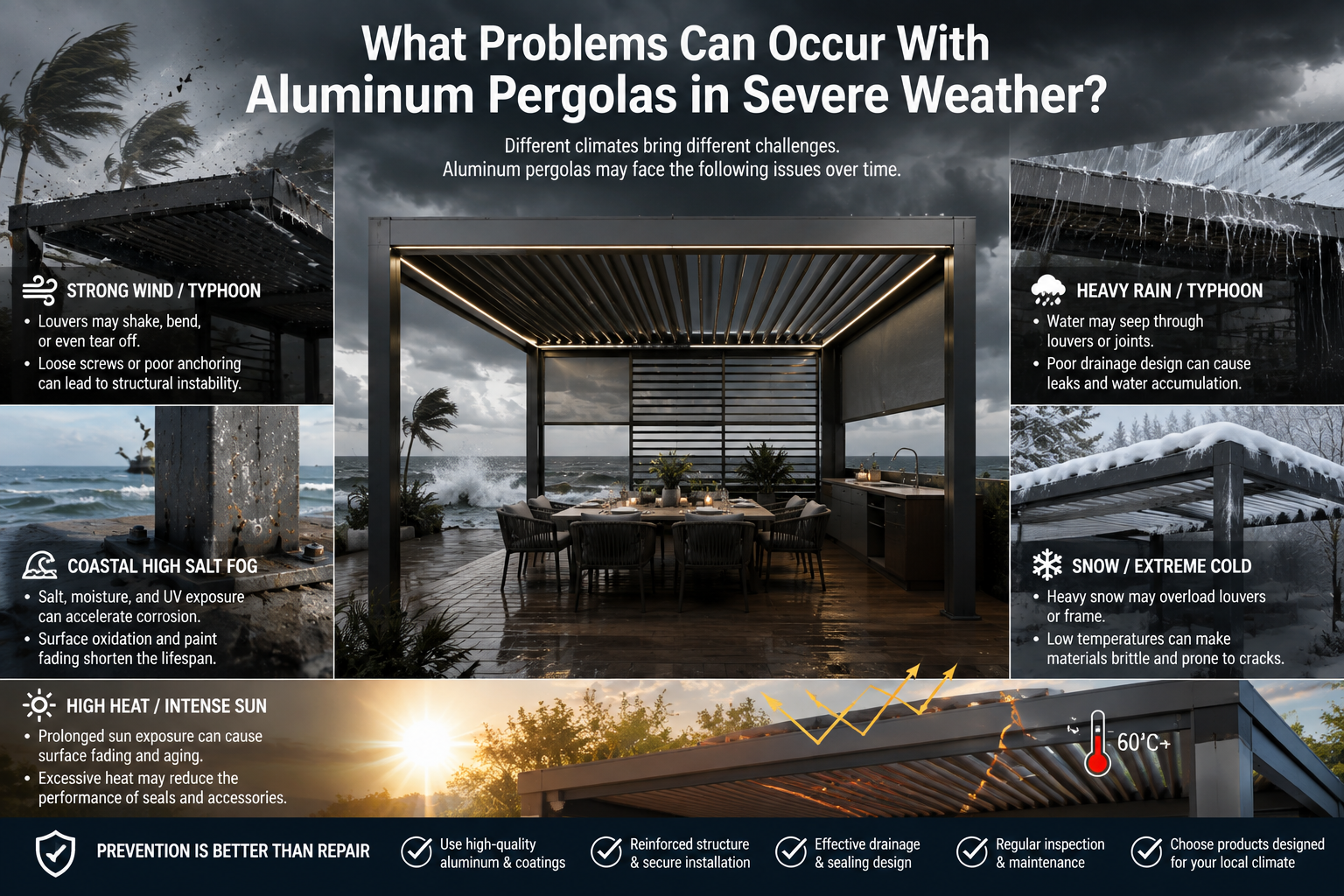
Snažan vjetar/tajfun: ljuljanje, deformacija pritiska vjetra, odletak krovnice
Snažan vjetar je najveći test za albane od aluminijumske legure. Lakše konstrukcije krova mogu se deformirati pod pritiskom vjetra, a jednostavni spliced modeli se primjetno viju u jakim vjetrovima, što predstavlja opasnost za sigurnost.
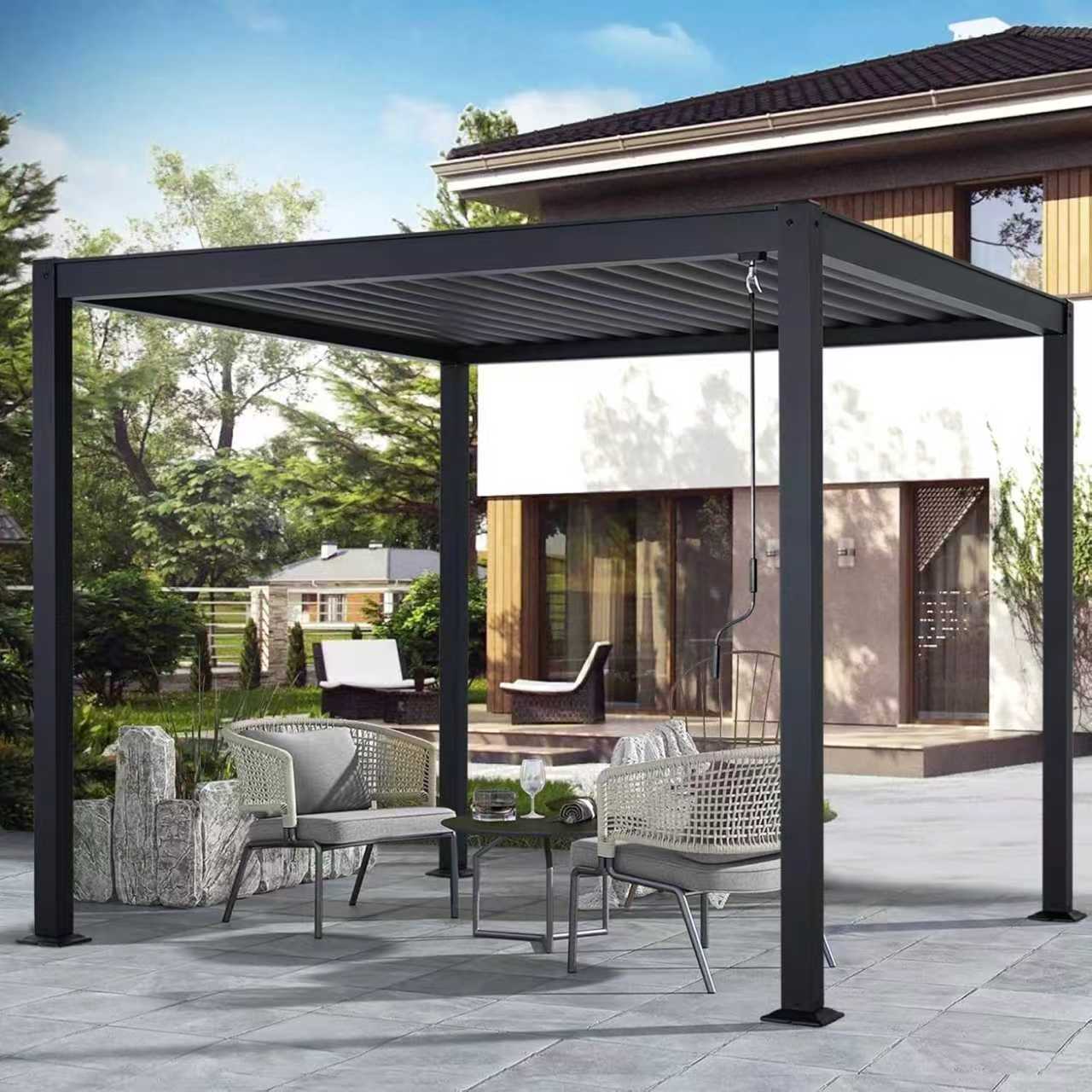
Ovo je albanac od aluminijumske legure koji je kupio jedan od naših kupaca od drugog dobavljača, a koji je oštećen jakim vjetrom. Kasnije, kad sam ga pitao zašto je odabrao ovaj model, ono što mi je rekao natjeralo me da shvatim da je to uobičajena misao među većinom početničkih kupaca: oni misle da je paviljon samo četiri stuba i krov s krovom, a budući da je razlika u cijeni značajna, oni Nakon toga, mogao je samo bespomoćno nasmiješiti...
Mogući problemi s ovom vrstom paviljona:
- Profili tankih zidova: Tanki zidovi stubova pokazuju vidljivo ljuljanje pod jakim vjetrom
- Na vjetrovoj strani krova postoji pozitivan pritisak, dok na podnežnoj strani stvara usisavanje negativnog pritiska; lagani krovi mogu deformirati pod pritiskom vjetra
- Nečvrsto zauzete ploče na krovovima mogu se podići kad vjetar udara
- Na mekom tlu ili na neravnom temelju mogu se nagnuti zbog dugotrajne uporabe.
Standardno dizajnirani albumi od aluminijumske legure obično mogu izdržati vjetar snage 8 (približno 20 m/s); dobro dizajnirani proizvodi imaju otpornost vjetra od oko snage 10 (24,5-28,4 m/s). Tijekom upozorenja na tajfun preporučuju se privremene mjere za pojačanje; na nivou uragana potrebno je rastaviti ili se preseliti u zatvorenom prostoru.
Preventivna mjera:
- U slučaju da se ne primjenjuje primjena ovog članka, za određene vrste vozila, za koje se primjenjuje ovaj članak, potrebno je utvrditi:
- U slučaju da je to moguće, mora se osigurati da se ne pojačavaju.
- U slučaju da se ne primjenjuje presjek, u slučaju da se ne primjenjuje presjek, treba se upotrijebiti i presjek.
Obilna kiša/tajun: Ispuštanje iz zglobova, prolivanje kapilara, povratni tok
Sama aluminijumska legura ne apsorbira vodu, ali spojevi su kritična slaba točka za hidroizolaciju.
Ako postoji curenje zglobova, mogu se pojaviti sljedeći simptomi:
- U slučaju da se u slučaju pojave teške kiše (kiše od 30 mm/h), može se pojaviti proliv kapilara u zglobovima.
- Snažan vjetar koji dolazi od tajfuna može privremeno uzrokovati kapljice
- U slučaju da je u skladu s člankom 6. stavkom 2. točkom (a) ovog članka, za sve vrste vodenih voda, primjenjuje se sljedeći postupak:
- Čvrstoća i pukotina čepova mogu se pojaviti u roku od 1-3 godine, te gubiti elastičnost
Preventivna mjera:
- U slučaju da se ne primijenjuje, ispitivanje se provodi u skladu s člankom 6.
- Uvođenje višestrukog vodonosnog otpornosti + ugrađena skrivena odvodnja: ugrađeni vodovodni vodovi u gredi, sekundarni vodovodni kanali → integrirani skriveni žlijezde → odvodnjavanje kroz šupljine stubova izravno do zemlje
- U slučaju da se ne primjenjuje primjena ovog članka, za sve druge proizvode koji se upotrebljavaju u proizvodnji, primjenjuje se sljedeći postupak:
- U vodopadovima treba biti izlaznih kanala za prelivanje vode; ako se voda zatvori tijekom kiše, voda se automatski ispušta van, što sprečava povratak vode
Priobalni visokosolni sprej: površinske mrlje oksidacije, hrđa na hardveru
U okruženjima s visokim razlozima soli, čak i ako je glavno tijelo aluminijumska legura, suočava se s ozbiljnim izazovima.
Tipične manifestacije u okolini s solnim prsima:
- Dugootrajna izloženost može uzrokovati mrlje oksidacije na površini legure, utječući na estetiku i potencijalno ubrzavajući lokalnu koroziju
- Obični prašak bez odgovarajućeg tretmana može pokazati mjehuriće i lučenje nakon otprilike 2 godine
- Željezno opremo može zarđati i puknuti u roku od 2-3 godine, što direktno ugrožava sigurnost konstrukcije
- Često toplinsko širenje i sužavanje u područjima s ekstremnim temperaturnim razlikama može uzrokovati opuštanje spojeva
Preventivna mjera:
- Za obalna područja/pod suncem, upotrebljavajte profesionalno vanjsko visoko-temperatursko elektrostatsko prskanje koje je prošlo testiranje neutralnim solnim prskanjem
- Sva oprema za spajanje mora koristiti 304 nehrđajućeg čelika; željezni dijelovi su zabranjeni
- Glavni okvir priključnice točke moraju biti potpuno zavarili + bez problema poliran eliminirati lažne zavari
Sneg / hladnoća: snježni teret, mrazni oblak, hladno krhkost premaza
U sjevernim područjima s velikim snegom, albumi iz aluminijumske legure moraju istodobno podnijeti dvostruki pritisak težine snijega i slabosti metala pri niskim temperaturama.
Tipične manifestacije u teškom snijeg / snažnoj hladnoći:
- Kada se akumulacija snjega iznad premašuje projektno opterećenje (standardni snjež oko 30-40 cm), grede mogu deformirati
- Lažne pozicije zavarivanja mogu se lako puknuti pod snježnim snježnim obiljem
- Topli snijeg stvara nakupljanje vode na vrhu, što uzrokuje pomak mraza koji oštećuje strukturu
- Obični prašak premaz može razviti hladno-skrčenje pukotina u okruženjima od minus 30-40 stupnjeva
Preventivna mjera:
- Za područja s velikim udjelom snijega prilagođite debljene profile; dizajnirajte ukupnu strukturu za opterećenje snijega od ≥ 30-40 cm
- Postavite skrivene vodovod kanala na vrhu tako topljenje snijeg odvod duž kanala bez nakupljanja ili smrzavanja
- Brzo uklanjanje snježnih naslaga s vrha nakon snažnih padavina
Visoka temperatura i izlaganje suncu: unutarnja vrućina, starenje premaza, zvuk metalne krovnice
Tipične manifestacije nakon visoke temperature:
- Metalni krovni imaju snažnu toplotnu provodljivost; unutarnje temperature znatno rastu ljeti, postajući zagušene bez konstrukcije toplinske izolacije
- Donja boja može se luštati i izblijedjeti za pola godine
- Kiša i gradnjak koji udaraju na metalnu površinu krova stvaraju primjetnu buku
- Termalno širenje i kontrakcija pod ekstremnim temperaturnim razlikama mogu uzrokovati probleme sa zglobovima
Preventivna mjera:
- Koristite motorizirane pramenove / podešavanje svjetlo krovove blokirati izravne visoke temperature u ljeto
- Napuni krov izolacijskim slojevima; koristi matne površine kako bi se smanjila odraznost
- U slučaju da se upotrebljava u slučaju izloženosti, upotrebljava se metoda za ispitivanje.
Popis provjera nakon ekstremnih vremenskih prilika
Bez obzira na to koju vrstu ekstremnog vremena ste doživjeli, Gwei preporučuje provjeriti sljedeći popis:
- Povezivači: provjerite da li su svi vijci i nosači labavi; brzo ih stegnite i ojačajte
- U slučaju da se ne primjenjuje, ispitni postupci se provode u skladu s člankom 6. stavkom 2.
- Čvrstina i otpornost na otpad
- Sistemi odvodnje: čisti listovi i sedimenti iz žlijezda kako bi se osigurala glatka odvodnja
- Osnova: Provjerite da li su stupovi u osnovi olakšani, nagnuti ili da li su se ugradili
(Regularno održavanje čišćenje kanala za odvod od lišća i sedimenta svake četvrtine i provjera elastičnosti zapečaćivanja svake godine može spriječiti 80% problema povezanih s vremenskim uvjetima)
Preporuke o odabiru materijala za različite regije
Obalni tajfun: Glavni rizik je korozija solnim prsima + jak vjetar. U slučaju da je to potrebno, u skladu s člankom 6. stavkom 1.
Sjeverna područja s velikim snegom: Osnovni rizik je snježna opterećenja + niska temperatura. U slučaju da je to potrebno, u slučaju da je potrebno, za upotrebu u proizvodnji, potrebno je upotrijebiti i druge metode za ispitivanje.
Južna kišna područja: Glavni rizik je curenje + visoka vlažnost. U slučaju da je to moguće, potrebno je utvrditi da je to moguće.
Južno-zapadna i sjeverozapadna područja s visokom količinom sunčeve svjetlosti: Glavni rizik je UV starenje i razlike u temperaturi. Ključna konfiguracija: poliester otporan na vremenske uvjete + izolacijski slojevi punjenja.
Komercijalni otvoreni sjedišta: Oni se suočavaju s sveobuhvatnim testom. Ključna konfiguracija: motorizirane križare + senzori vjetra/ kiše + IP54 vodootporni motori udobno i estetski ugodno okruženje će zadržati vaše kupce.
Odluka Komisije
Na kraju, želim svima reći: performanse albuma od aluminijumske legure u lošem vremenu zavise 70% od izbora materijala i 30% od instalacije. Bez obzira koliko su dobri profili, ako su fiksirani na mekom tlu ili koriste željezni materijal, otpor vjetra je jednak nuli. U slučaju da se proizvod ne može upotrijebiti za proizvodnju električne energije, potrebno je utvrditi razinu otpornosti na vjetar. Želeći svima mogućnost da izaberu svoj idealni deblu.
Ovo je IKE, vaš stručnjak za vanjska rješenja
 Vruće vijesti
 EN
EN